Carmo Archaeological Museum
In the Gothic ruins of the Carmo, open to the sky since the earthquake, Portugal's first museum of art and archaeology, founded in 1864.
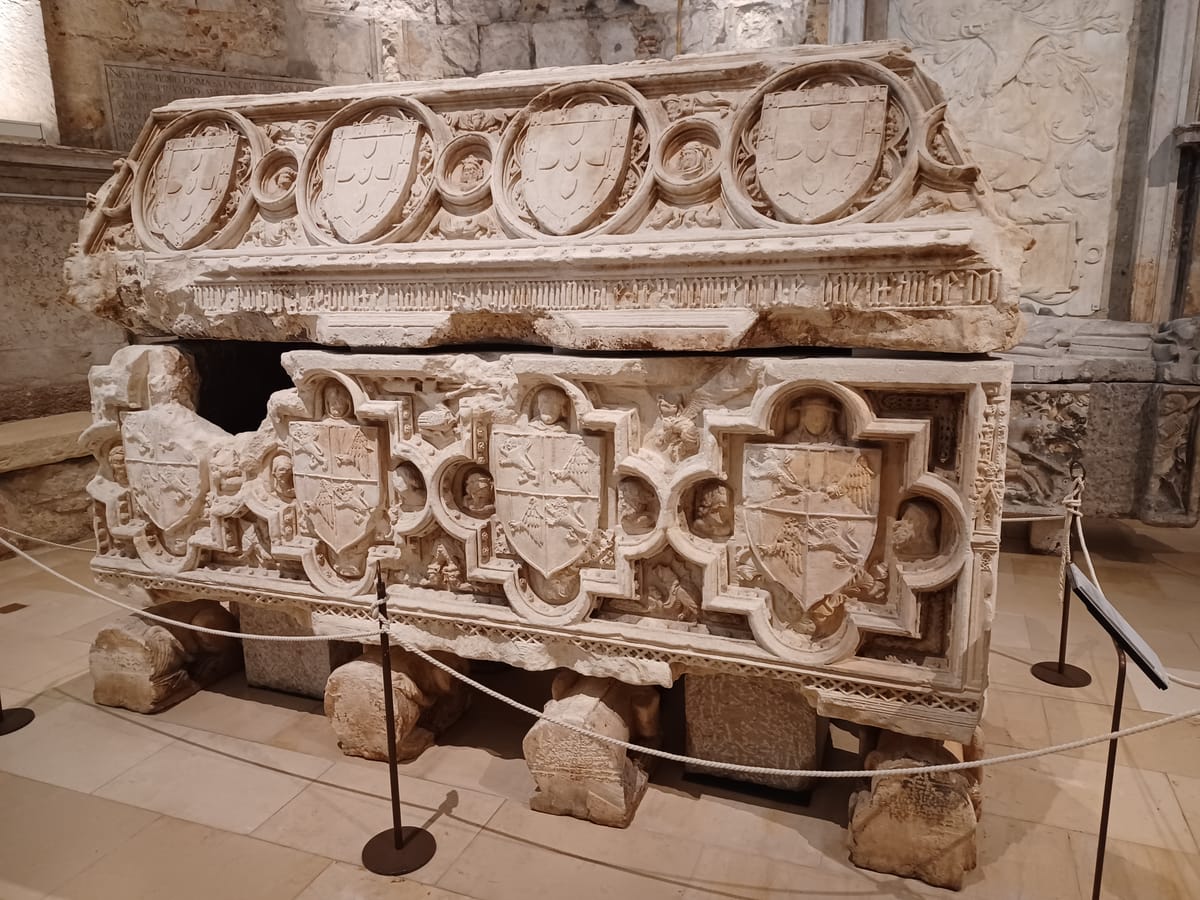
Carmo Archaeological Museum – Ruins of the Carmo Convent
In the ruins of the church of the Carmo Convent, whose construction dates back to 1389 at the initiative of the High Constable Nuno Álvares Pereira, who chose to be buried there, the Carmo Archaeological Museum was founded in 1864 by Joaquim Possidónio Narciso da Silva, first president of the Association of Portuguese Archaeologists, which still runs it and has its headquarters there. It was the country's first museum of art and archaeology, created to safeguard a heritage that was being lost after the dissolution of the religious orders, the French Invasions and the Liberal Wars. The Gothic church, which rivalled the Cathedral, was badly damaged by the 1755 earthquake and the fire that followed; the neo-Gothic rebuilding begun in 1756 was halted in 1834 and, in keeping with Romantic taste, the naves were left open to the sky, turning the ruins into a memorial to the earthquake. The highly eclectic collection spans prehistory to the contemporary period, with around a thousand pieces on permanent display: architectural and sculptural fragments, funerary monuments, tile panels and coats of arms, the collection of Roman inscriptions, pre-Columbian ceramics and mummies, an Egyptian sarcophagus and mummy, and finds from the Chalcolithic hillfort of Vila Nova de São Pedro, in Azambuja. Closed in 1995 because of the Metro works, the museum then underwent a complete redesign of its exhibition space.
Located at: Museu Arqueológico do Carmo
Address: Largo do Carmo, 1200-092 Lisboa
Opening hours: Monday to Saturday 10:00-19:00 (May to October) and 10:00-18:00 (November to April); last entry 20 minutes before closing (closed on Sundays, 25 December, 1 January and 1 May)
Phone: +351 213 460 473
Coordinates: 38.712006, -9.1405862
Buses: 711, 732, 746, 759, 783, 709, 736, 758, 22B, 737
Tram: 12E, 28E, 24E, 15E
Metro: Baixa-Chiado (Blue, Green), Rossio (Green)
Train: Sintra Line, Rossio Station, Cascais Line, Cais do Sodré Station
Boat: Terreiro do Paço River Station
Opened: 1864 (162 years)