Money Museum
In the former Church of São Julião, Banco de Portugal's museum tells the story of money and keeps a stretch of King Dinis's wall.
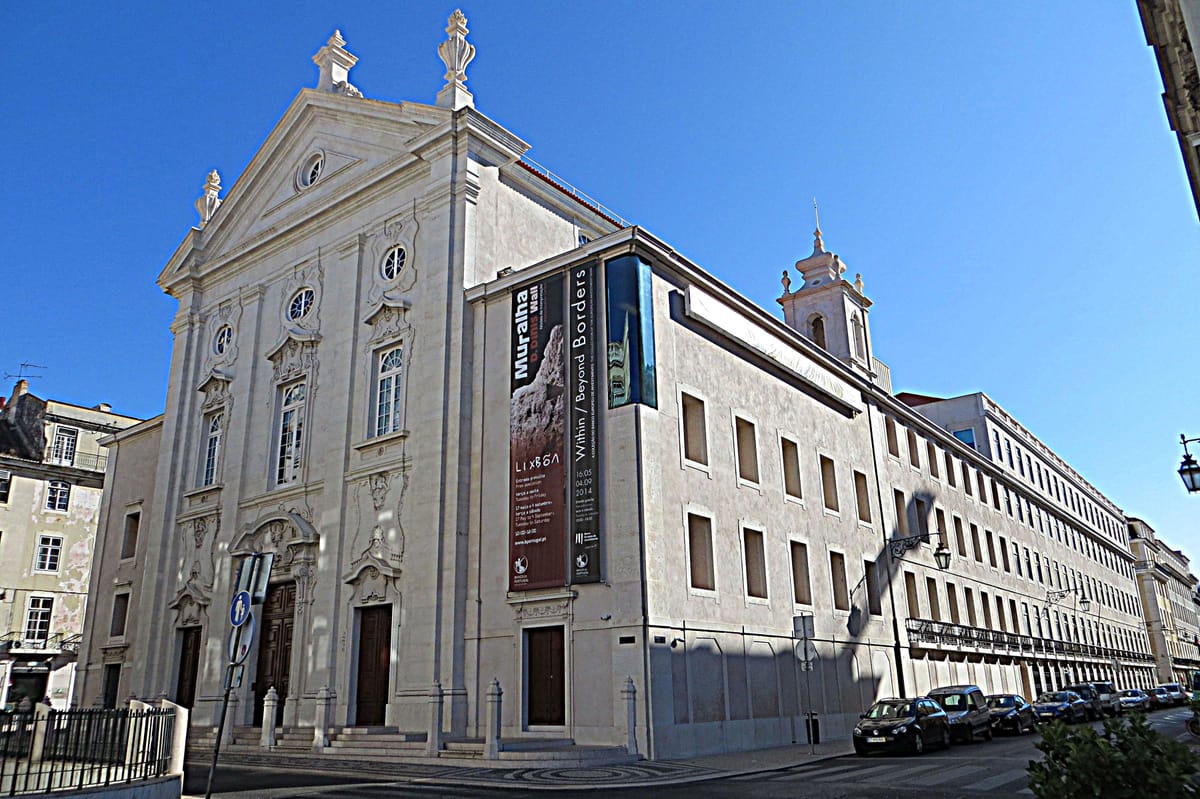
Money Museum – Former Church of São Julião
Housed in the former Church of São Julião in the Baixa, Banco de Portugal's Money Museum opened in April 2016 and tells the story of money and its evolution in Portugal and around the world. The original church stood to the north of the Church of Nossa Senhora da Oliveira; destroyed by the 1755 earthquake, it was rebuilt on the site once occupied by King João V's Patriarchal Church, in works completed in 1802 and resumed, after a fire in 1816, until 1854. Banco de Portugal decided to buy it in 1910 and the deed was signed in 1933, when the church was deconsecrated; it escaped a demolition approved in 1973, halted after the 25 April revolution, and was restored during the refurbishment of the bank's headquarters between 2007 and 2012. With museography by Providência Design, the themed rooms cover pre-monetary currency, money around the world and through the centuries, the production of banknotes and coins, the tasks of Banco de Portugal and the role of money in citizens' lives, in a markedly interactive visit. In the crypt, the King Dinis Wall Interpretation Centre displays a stretch of the late 13th-century riverside wall, classified as a National Monument and uncovered by archaeological excavations in 2010. Admission is free.
Located at: Museu do Dinheiro
Address: Largo de São Julião, 1100-150 Lisboa
Opening hours: Wednesday to Sunday 10:00-18:00 (closed on Mondays and Tuesdays)
Phone: +351 213 213 240
Coordinates: 38.7086234, -9.1387855
Buses: 711, 746, 759, 774, 783, 732, 736, 728, 10B, 706
Tram: 12E, 28E, 15E, 25E
Metro: Baixa-Chiado (Blue, Green), Terreiro do Paço (Blue)
Train: Cascais Line, Cais do Sodré Station, Sintra Line, Rossio Station
Boat: Terreiro do Paço River Station
Opened: 2016 (10 years)