GNR Museum
In the Carmo Barracks, where the dictatorship fell in 1974, uniforms, weapons and flags tell the story of the GNR and its predecessors.
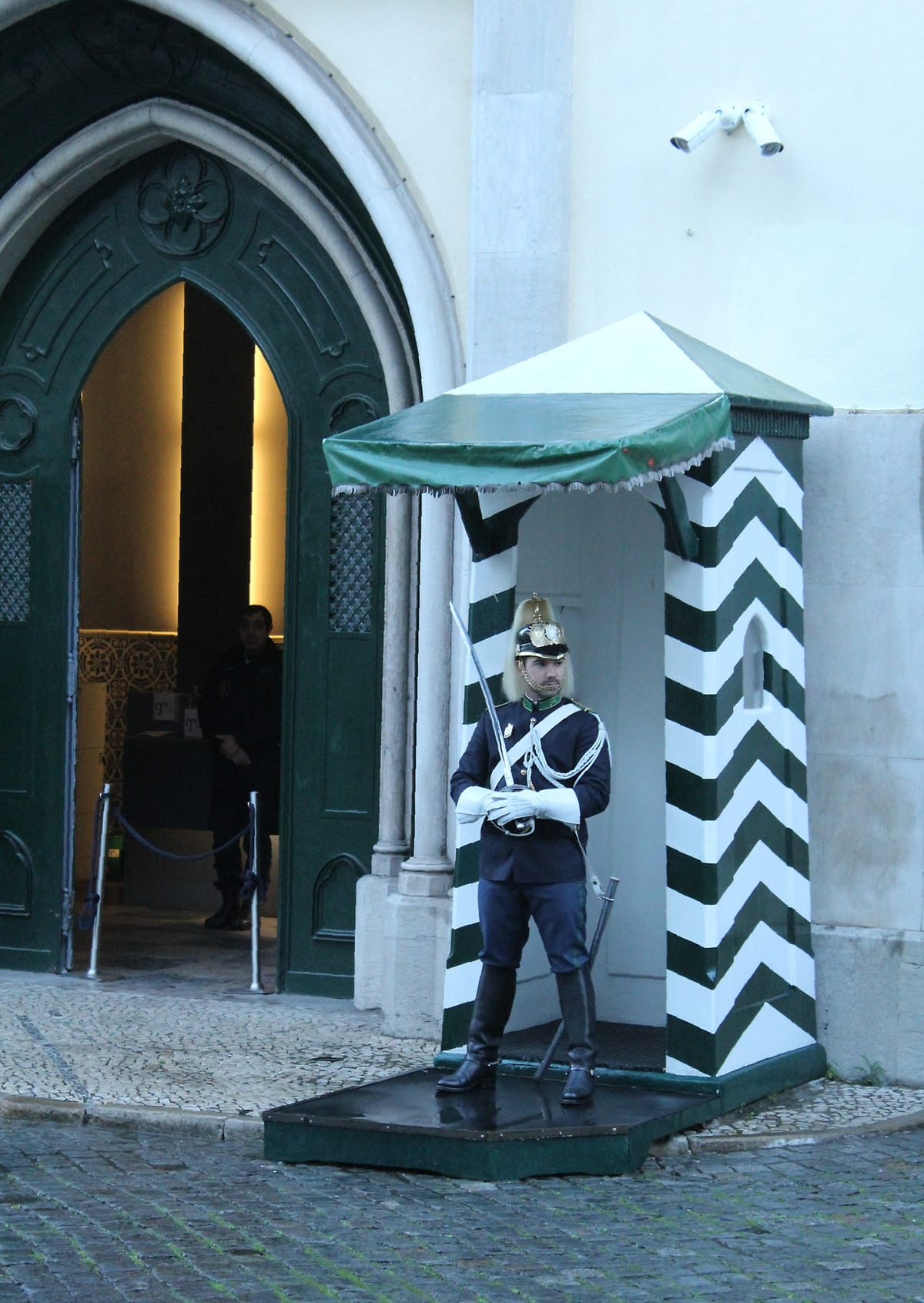
Museum of the Guarda Nacional Republicana – Carmo Barracks
On Largo do Carmo, the Museum of the Guarda Nacional Republicana occupies the barracks housed in the former Carmo Convent, whose first stone was laid by Nuno Álvares Pereira in 1389 and where he died in 1431. After the 1755 Earthquake the convent fell into decline and came under military occupation: from 1801 it served the Royal Police Guard of Lisbon, from 1845 it was used solely as the barracks of the Municipal Guard and, ever since, it has been the headquarters of Portugal's military police forces, down to today's GNR, created by decree on 3 May 1911. It was here, on 25 April 1974, that the dictatorship fell, making the barracks an 'emblem of the 25th of April'. Opened in 2014, the museum is run by the Guard's History and Culture Division and displays part of a heritage of some two thousand pieces, gathered after a survey of the institution's six hundred or so barracks and dating from the late fourteenth century onwards. There are uniforms, weapons, decorations, flags, painting, sculpture, ceramics, furniture, tiles, vehicles, musical instruments and clocks, bearing witness to the convent and to the royal, municipal and republican guards. Recent additions include the Galland Sommerville revolver, carried by the Municipal Guard from 1872, whose donation earned the museum an honourable mention at the 2021 APOM Awards.
Located at: Arquivo e Museu da GNR
Address: Largo do Carmo, 27, 1200-090 Lisboa
Opening hours: Monday to Saturday 10:00-18:00 (last admission 17:30; closed on Sundays)
Phone: +351 217 655 640
Coordinates: 38.7122726, -9.1407119
Buses: 711, 732, 746, 759, 783, 709, 736, 758, 737, 22B
Tram: 24E, 12E, 28E, 15E
Metro: Baixa-Chiado (Blue, Green), Rossio (Green)
Train: Sintra Line, Rossio Station, Cascais Line, Cais do Sodré Station
Boat: Terreiro do Paço River Station
Opened: 2014 (12 years)