Águas Livres Aqueduct
The 35 arches over the Alcântara valley, an 18th-century work that brought water to Lisbon and survived the 1755 earthquake.
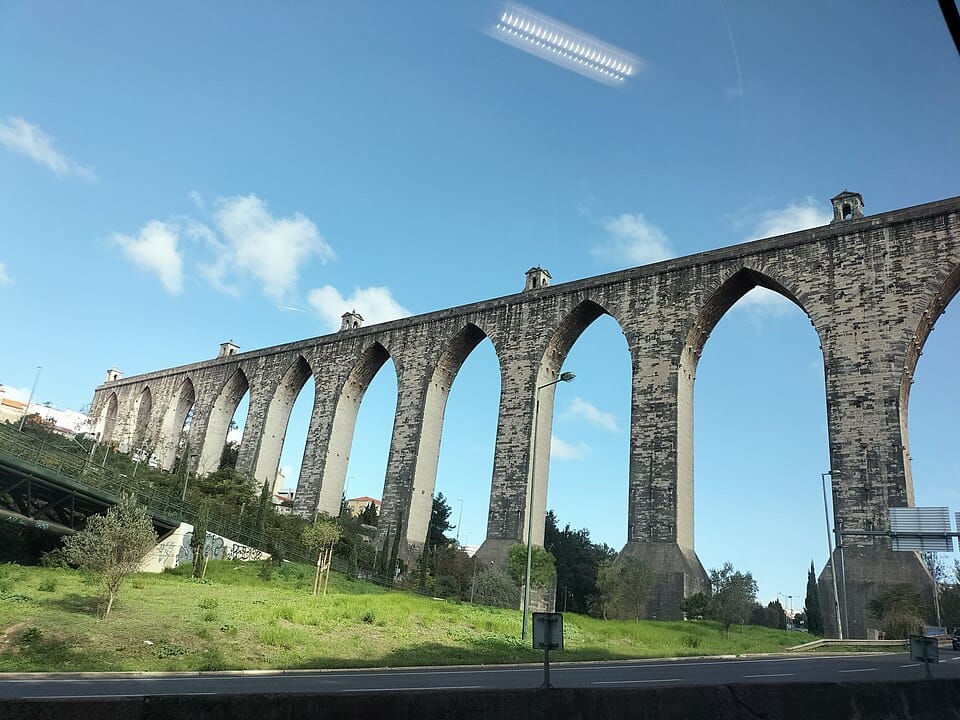
Águas Livres Aqueduct – Alcântara Valley Arches (EPAL Water Museum)
Built between 1731 and 1799 by royal decree, the Águas Livres Aqueduct was a vast system for collecting and carrying water by gravity, classified as a National Monument since 1910 and regarded as a remarkable work of hydraulic engineering. It drew on the Águas Livres springs, in the Belas area north-west of Lisbon, broadly following the route of the old Roman aqueduct, and was paid for by a tax, the Real de Água, levied on olive oil, wine and meat. The main section, 14 kilometres long, runs from the Mãe de Água Velha in Belas to the Mãe d'Água reservoir at Amoreiras; with the secondary branches, which brought water from some 60 springs, and the galleries that supplied around 30 fountains, the system reached nearly 58 kilometres by the mid-nineteenth century. It withstood the 1755 earthquake and stopped supplying the city with drinking water in the 1960s. The great arcade across the Alcântara valley, 941 metres long with 35 arches, includes the largest pointed stone arch in the world, 65.29 metres high. The EPAL Water Museum runs self-guided and guided visits to the arcade, entered from Calçada da Quintinha; the longer guided routes require booking.
Located at: Museu da Água – EPAL
Address: Calçada da Quintinha, 6, 1070-225 Lisboa
Opening hours: Tuesday to Sunday 10:00-18:00 (closed on Mondays and public holidays); guided tours by appointment
Phone: +351 218 100 215
Coordinates: 38.729747, -9.170431
Buses: 756, 702, 713, 751, 61B
Train: Sintra Line, Campolide Station
Opened: 1731 (295 years)