Patriarcal Reservoir
Beneath the Príncipe Real garden, an octagonal cistern of 1860-1864 with 31 stone pillars, open by appointment through the Water Museum.
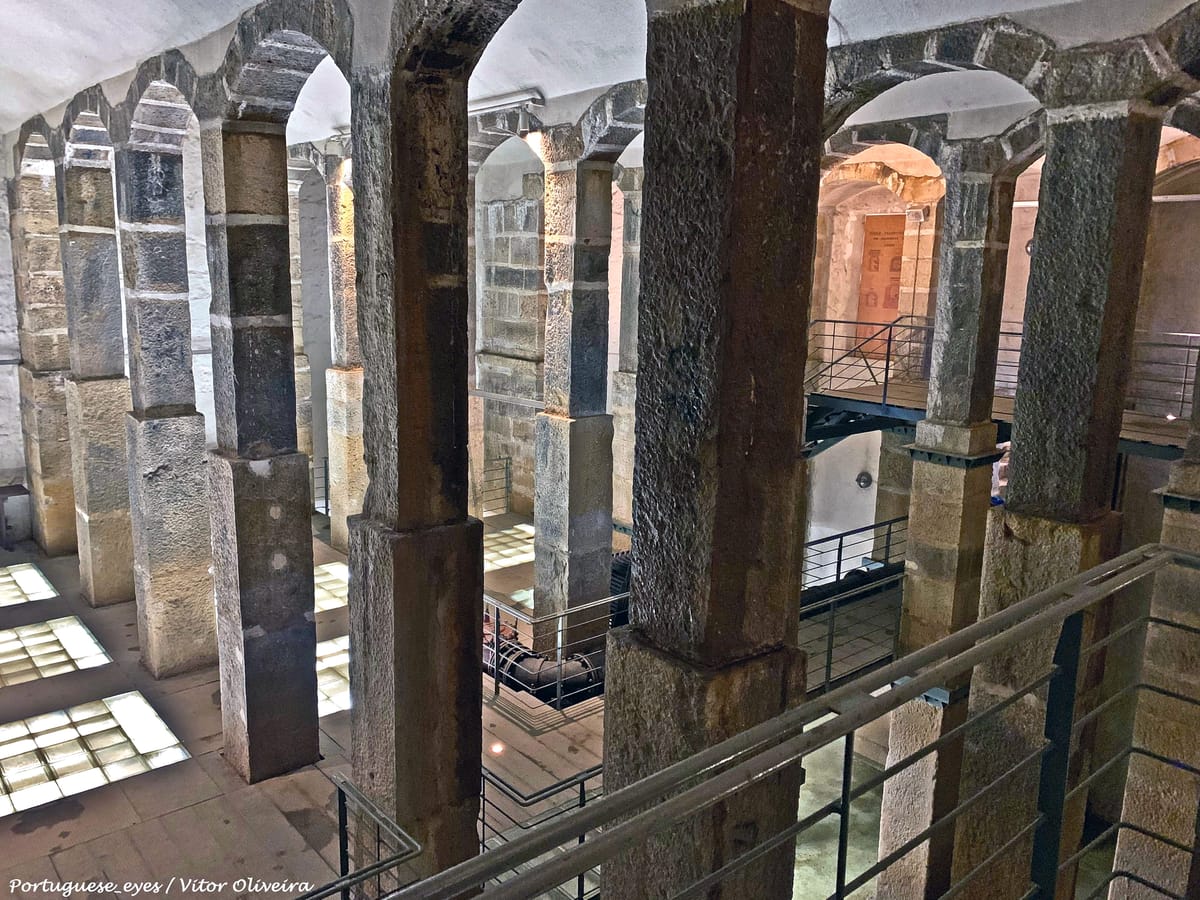
Water Museum – Patriarcal Reservoir
Hidden beneath the Príncipe Real garden, the Patriarcal Reservoir, also known as the Praça de D. Pedro V Reservoir, was designed in 1856 as part of the French engineer Louis-Charles Mary's plan to supply water to Lisbon, and was built between 1860 and 1864 to serve the lower part of the city. Its octagonal shape matches that of the iron railing around the garden's pond, which sits directly above the tank. The cistern, built of stone masonry, has two compartments with a total capacity of 884 m³ and was originally fed by the Águas Livres Aqueduct; its main role was to regulate the pressure between the Arco Reservoir, in Amoreiras, and the pipes of the lower town. Thirty-one pillars 9.25 metres high support ashlar arches and vaults, on which rests the pond with its fountain, intended to aerate the water before it entered the reservoir. Three underground galleries lead off from it, one of which joins the Loreto Gallery, which can be walked on guided tours as far as the São Pedro de Alcântara viewpoint. Decommissioned in the late 1940s, the reservoir has been part of EPAL's Water Museum since 1994. Visits are by prior appointment only, through the Water Museum.
Located at: Museu da Água – EPAL
Address: Praça do Príncipe Real, 1250-184 Lisboa
Opening hours: By prior appointment only (Water Museum, tel. +351 218 100 215)
Phone: +351 218 100 215
Coordinates: 38.716636, -9.148522
Buses: 758, 19B, 773, 22B
Tram: 24E
Metro: Avenida (Blue), Restauradores (Blue)
Train: Sintra Line, Rossio Station
Opened: 1860 (166 years)