Folk Art Museum
In Belém, a 1940 pavilion with modernist murals of Portugal's regions; currently closed for refurbishment.
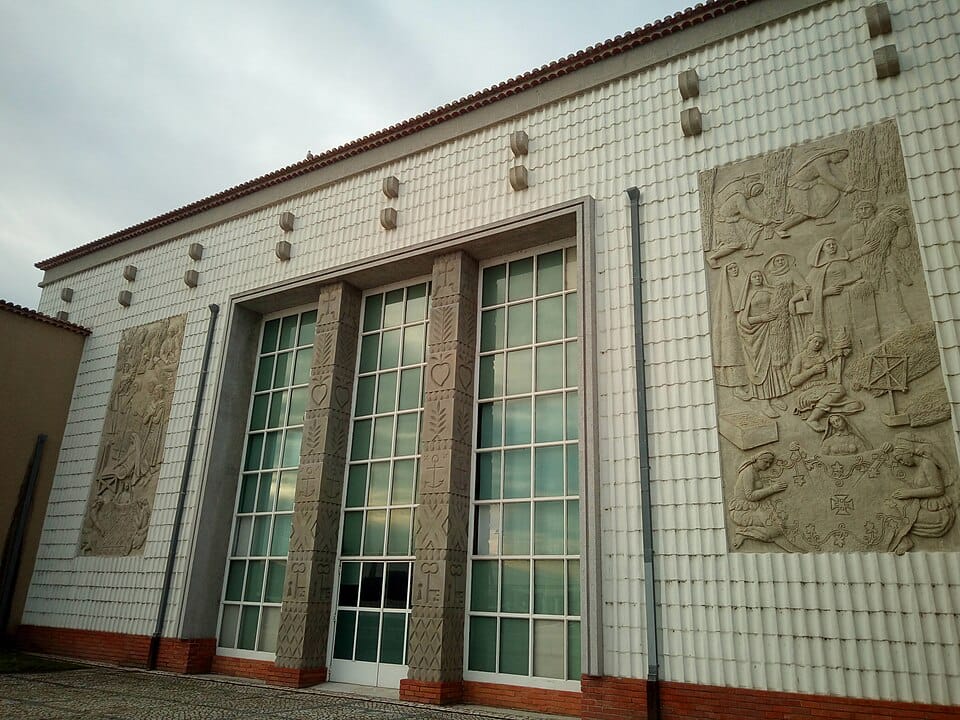
Museu de Arte Popular (Popular Art Museum)
On Avenida de Brasília, in Belém, the Folk Art Museum opened in 1948 in the former pavilion of the Popular Life Section of the 1940 Portuguese World Exhibition, designed by the architects António Reis Camelo and João Simões. Its conversion into a museum was the work of the architect Jorge Segurado, following a programme drawn up by the ethnographer Francisco Martins Lage and the artist Tomás de Mello, which combined decorative elements of modernist taste with others of traditional inspiration. A large team of decorative painters, among them Carlos Botelho, Eduardo Anahory, Estrela Faria, Manuel Lapa and Paulo Ferreira, left in its galleries a remarkable set of murals devoted to the various regions of the country, a quality that led to the building being classified as a Monument of Public Interest in 2012. The collection, built up from a number of exhibitions and enlarged by purchases and donations, brings together ceramics, folk jewellery, musical instruments, basketry, textiles, costumes and embroidery, farming implements and miniature boats and animal-drawn carts. The permanent exhibition closed in 2000 and, in 2006, the collection was transferred to the National Museum of Ethnology, to whose programme the museum was fully attached in 2016, its activity limited to temporary exhibitions. It is currently closed for refurbishment, with no reopening date announced.
Located at: Museus e Monumentos de Portugal
Address: Avenida de Brasília, 1400-038 Lisboa
Opening hours: Closed for refurbishment; no reopening date announced
Phone: +351 213 011 282
Coordinates: 38.6936571, -9.2083154
Buses: 729, 79B
Tram: 15E
Train: Cascais Line, Belém Station
Boat: Belém River Station
Opened: 1948 (78 years)